

Age Melbourne Newspaper 22nd Sept 2013
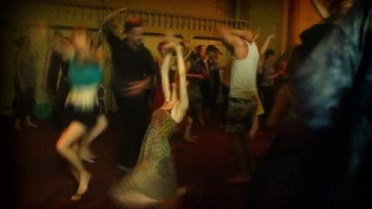 When the lights go down I have no idea what to expect. But the music starts and it just happens: we dance.
This is not alcohol-tainted, show pony strutting at a flash city nightclub. We're sober, in a church hall basement in Melbourne's inner north on a wet Wednesday evening, with the lights off.
More than 120 people have paid $5 to dance the way we did when we were kids. It's silly and freeing and utterly joyful.
When the lights go down I have no idea what to expect. But the music starts and it just happens: we dance.
This is not alcohol-tainted, show pony strutting at a flash city nightclub. We're sober, in a church hall basement in Melbourne's inner north on a wet Wednesday evening, with the lights off.
More than 120 people have paid $5 to dance the way we did when we were kids. It's silly and freeing and utterly joyful.
Every song, whether sublime (soul diva, Aretha Franklin) or ridiculous ('90s Eurotrash, Aqua), is met with the same heady abandon. Bodies pulse and sway and leap. For 75 minutes, the floor is a heaving mass of life. Advertisement ''Coming here is my sanity,'' says 31-year-old textile design student and mother-of-two Liza Freddi. ''It's the place where I can just release, and connect with myself.''
This is No Lights No Lycra - a dance class in the dark, with no steps and no teacher, where being immersed in the joy of movement is the only objective. By evening's end, I'm riding a high of euphoria. I walk into the crisp air, steam rising from my head, and realise I've been blissfully lost in a state of play. The runaway success of these nights - No Lights began in 2009 with two friends in Melbourne and has grown to 33 locations around the world - is suggestive of a culture bursting to play. And, according to a growing band of researchers, sociologists and health experts, it's exactly what more of us should be doing. Far from being a frivolous indulgence, an emerging evidence base suggests playtime in adulthood may actually be critical to human development. ''From a biological and evolutionary point of view, social mammals have been hard-wired for play for hundreds of millions of years. It's a fundamental survival drive, not too dissimilar from sleep and dreams.